Showing posts with label soup. Show all posts

Thursday, October 28, 2010

Korean Oxtail Soup (Gom Tang)


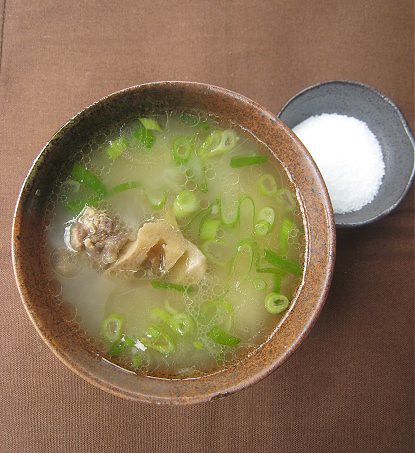
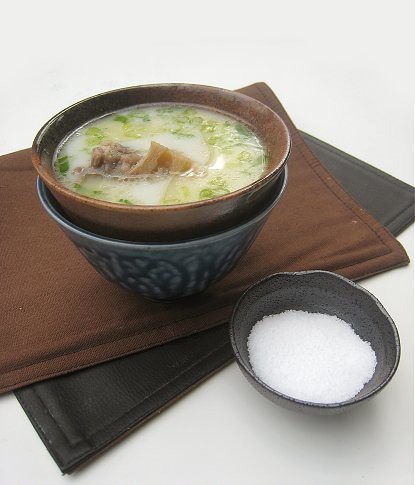
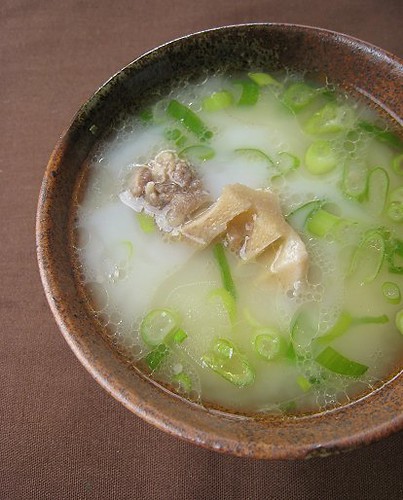
Korean Oxtail Soup, served with coarse salt.

TS:
We bought some oxtails one day. Now what?

We have used oxtail in applications that nod to Jamaica (Jamaican Oxtail Stew) and to Mexico (Shredded Beef and Tripe Tacos), but more often than not, we fall back to making our favorites, like a simple Clear Oxtail Soup, or Kare-Kare (Philippine Oxtail Peanut Stew) -- OMGTHEDELICIOUSNESS!!!

JS:
With oxtails, it is always the "Mendy's question".**

See, we're so enamoured with kare-kare and bulalo that we think them the apotheoses of oxtail, oxtail the best that it can be.

TS:
But, perhaps, this time we should made something totally new.

** Seinfeld reference


JS:
Okay then.

TS:
Well, we didn't venture too far when we made this Korean Oxtail Soup. I used the instructions from My Korean Cuisine as my guide.



TS:
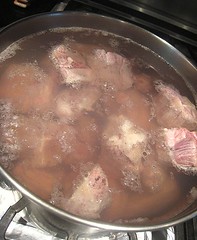
First, I placed the meat in cold water and brought the water to a boil. Once the exterior of the meat has changed color, I drained the pot.

After draining, the meat is rinsed to get rid of any residual coagulated blood.


TS:
I put the meat back into the pot (which I also rinsed out), covered with cold water, and brought the mixture to a boil. The pot is kept at a light boil.

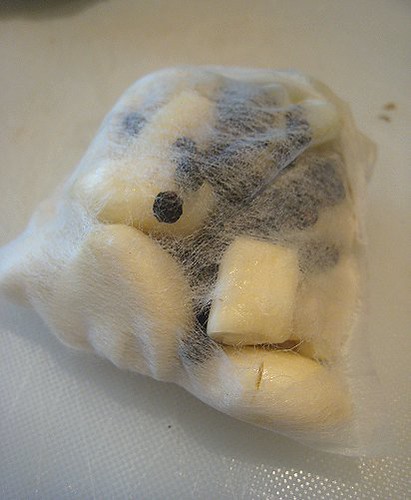
Oh, that pouch in there?


TS:
That pouch contained garlic, ginger, and black peppercorns.


TS:
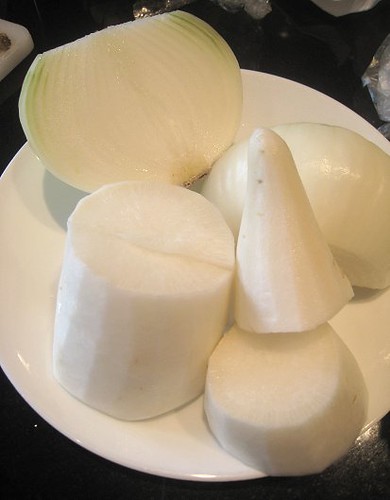
Some more components: onions and daikon radish.


TS:
After about 2 hours of boiling, I added the onions and daikon. Oh yeah, look at all that fat on top. Try to skim that off every so often.

I boiled the pot for a couple of hours more.

At this point, one can make the broth ultra-milky. My Korean Cuisine recommends removing all the solids from the soup, separating the meat from the bone, rinsing the bones clean and adding only the bones back into the pot, then boiling for more than 14 hours!

Well, I had already invested about 5 hours into this soup, and being lazy as I am, I wasn't in the mood for picking meat from bone, so my Korean Oxtail Soup stopped here.


TS:
This soup is usually served unseasoned, with the diner adding salt at the table. I simply added some green onions for some freshness and crunch.

JS:
I must say I cannot help comparing this soup to our standard bulalo (Philippine Beef Bone Soup) or clear soup. I found this oxtail soup quite rich -- and I'm afraid that is not exactly a compliment. That is, it seemed to me slightly too bovine-y, as if the oxtails haven't transcended their nature and reached their apotheosis as food. The soup sits heavily in the mouth and on the tongue, and I felt that I needed to rinse the soup out after I finished eating.

Maybe I needed to eat it with some kimchi, which alas, we didn't have at that time.

TS:
Perhaps I'll reserve judgment until after I taste a "professionally"-made soup. But, in this instance, this soup was nice enough, but I'm afraid my heart still belongs to our favorites.


For a guide to making Korean Oxtail Soup:
My Korean Cuisine: Korean Oxtail Soup

eatingclub vancouver Korean
Korean Sprouts & Spicy Cold Cucumber Salad
Kimchi Fried Rice, an addiction
Korean Soybean Sprouts Pancake (Kongnamul Jeon)
Korean Pork Bulgogi (with Muu Namul, Kong Namul)
Korean Roast Salmon
Korean Fried Chicken
Korean Sweet Potatoes with Yangnyeom Sauce
Japchae / Jap Chae (Korean Glass Noodles with Vegetables)
Brown Rice Bibimbap (Korean Rice Bowl)
Korean Oxtail Soup (Gom Tang)

Enjoyed this post? Why not subscribe to our blog? Subscribe via reader or subscribe via email. Thank you!

Friday, October 22, 2010

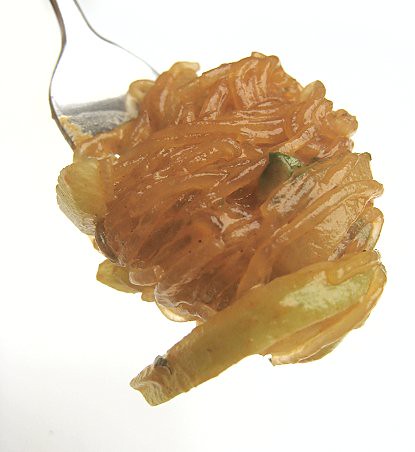
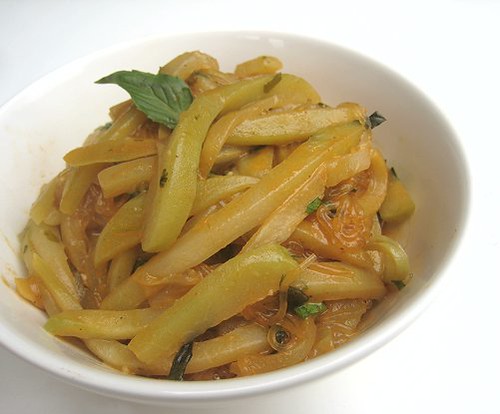
Chayote and Bean Thread Vermicelli with Mussel Coconut "Bisque" Sauce


TS:
A while, while, while back, we had a party. Besides numerous other dishes (of course), we also cooked off 8 pounds of mussels à la Congolaise.

I don't exactly know how these flavors are Congolese. We had seen this descriptor on a local restaurant's menu for a dish cooked with tomatoes, coconut milk/cream, "smoky chili" and citrus.

Congolese? Really?


TS:
Congolese or not, the flavors work.

So, I sautéed some onions and garlic along with tomato paste until the tomato paste was nicely cooked.

I may or may not have added a little bit of smoked paprika as well.

Then, I poured in some white wine and after a little bit, coconut milk.

The 8 pounds of mussels jumped into the creamy pool.

When they were cooked, I finished the whole thing with just a little squeeze of lime juice, and a generous amount of cilantro.


TS:
Why am I going on and on about mussels when this dish doesn't seem to have a mussel in sight?

After the guests had left, I noticed the serving bowl was devoid of mussels, but filled with the "Congolaise" sauce. As you may have already imagined, cooking 8 pounds of mussels will yield you quite a lot of exquisite mussel liqueur.

I couldn't waste that!

This was pure shellfish-y gold. It was so rich and flavorful that I had to christen it a "bisque".


TS:
What to do? What to do?

Wanting to do something different with some chayote on our counter besides our usual, I got to thinking and set to work.


TS:
I brought the mussel-infused coconut-tomato "bisque" to a boil then a simmer, reducing it somewhat, then dumped in my peeled chayote batons.


TS:
It seemed to me, though, that I still was not taking full advantage of the broth-y goodness in the pot.

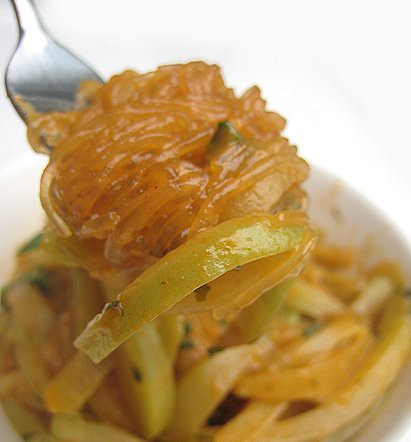
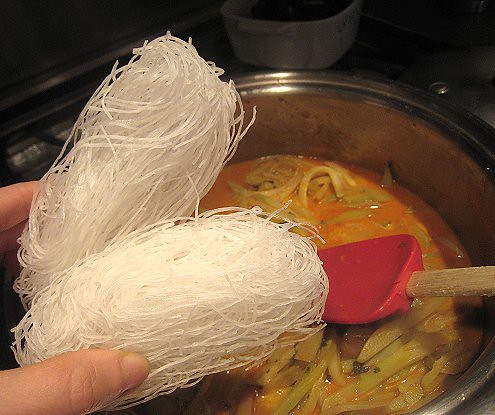
Noodles! That's what this needs. Taking the path of least resistance, I opted for bean thread vermicelli. No pre-cooking required. I just placed them in the pot until they were cooked. A few minutes, tops.


TS:
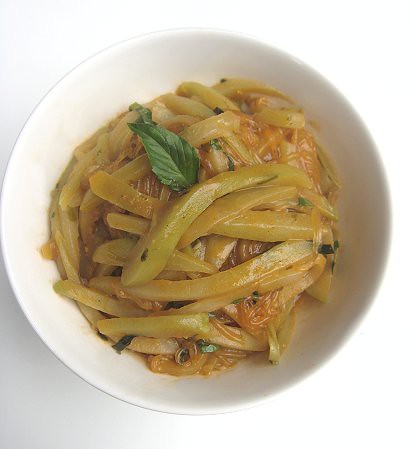
With the bean thread vermicelli, this dish seemed to have taken a decidedly Asian turn.


TS:
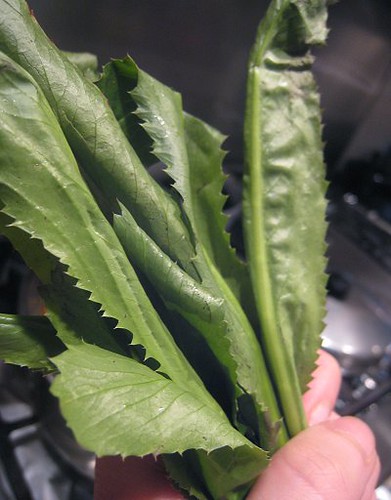
So, why not use up the rest of the culantro, aka saw-tooth herb, aka ngo gai, aka Mexican cilantro, that I still had leftover from making Pho Ga (Vietnamese Chicken Noodle Soup)?


TS:
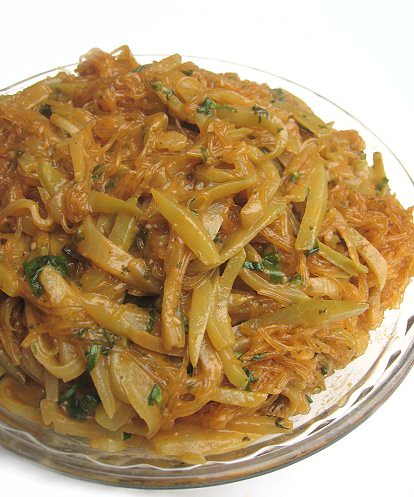
For a dish of dubious origins and muddled pedigree, this was absolutely mind-blowing!

The "bisque" was so rich and satisfying -- I do not know how that amount of liquid could have packed that much wallop of mussel-tomato-coconut flavor.

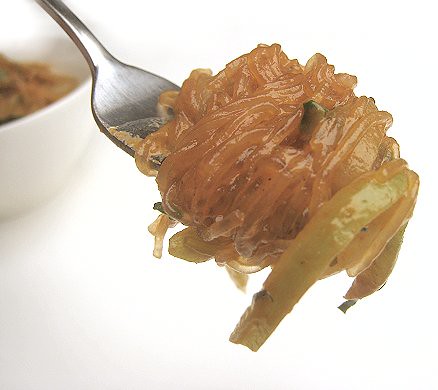
I love chayote and having it in this new, unusual way was a delight. The bean thread noodles absorbed all that bisque-y goodness and the culantro gave the dish a bright, verdant flavor.


TS:
The moral of the story: next time you have mussel liqueur from 8 pounds of mussels, you know what to do. ;)

Enjoyed this post? Why not subscribe to our blog? Subscribe via reader or subscribe via email. Thank you!

Friday, October 08, 2010

Sichuan "Crossed Hands" Wonton Dumplings 抄手, Two Ways (in Broth and with Chili Oil Sauce)


"Crossed Hands" Wonton Dumplings in Broth

JS:
I had some leftover wonton wrappers from our Smoked Salmon Rangoon escapades, so I decided to make use of them in another dumpling application.

Of course, I immediately had to top up my wonton wrappers and had to buy two extra packets, given that I was making dumplings for our family. Yes, we are a family of big eaters and I have a tendency to make too much food.

I've experimented with the Scarcity Principle a few years back for a couple of gatherings. We still implement it judiciously, on key occasions, but it seems like I can't quite use it when it comes to dumplings.

For this dumpling excursion, I bought 6 pounds of ground pork.


"Crossed Hands" Wonton Dumplings with Chili Oil Sauce

JS:
I also bought a couple of stewing chickens (called "old chicken" in Chinese) as I wanted to make a version of these "crossed hands/arms" dumplings in broth. Of course, I also had to make my personal favourite, dumplings swimming in Sichuan chili oil, topped with an explosion of ground roasted Sichuan peppercorns.

I looked at Fuschia Dunlop's "crossed hands" filling recipe and it is a straightforward one, just pork with seasonings (the usual suspects, soy sauce, Shaoxing wine, pepper).

All the better, since TS is not a big fan of the pork + cabbage combination (as seen in our post about CSC's Shanghai Potstickers and Faux Siu Mai) when it comes to meat fillings.


JS:
One concession I made to Fuchsia's recipe was making this "ginger water". I crushed some ginger and let it steep in cold water.

Then, it was a matter of mixing the meat with seasonings and pouring the ginger water slowly into the mixture to incorporate.


JS:
We filled these dumplings like tortellini: drop meat filling onto wrapper, fold into triangle, let two tips meet.

I assume the "crossed hands/arms" name comes from the way the wrapper tips come together in the middle like so.

Cooking the Dumplings


JS:
We boiled the dumplings in a pot of water and set them aside.


TS:
They look so brainy! Adorably brainy.

In Broth


JS:
I used the "old chicken" to make a broth, then simply ladled heated chicken broth over the dumplings.

Kinda plain Jane, isn't it?

To jazz it up, I'm thinking one can add some mushrooms (wood ear mushrooms would be nice for textural contrast, while shiitakes would add a deeper, woodsy flavour to everything), but we decided to eat them as is.

I suppose we could have also added some chopped green onions on top for extra flavour and color, but I was in a hurry to get to the chili oil version.

With Chili Oil Sauce


JS:
For my personal favourite, I roasted some Sichuan peppercorns in a dry pan until fragrant. Then, I ground them up, quite coarsely as you will see, but you can ground them up finer if you wish.


JS:
To make the chili oil sauce, I took some Red Chile Oil 紅油 (how to make red chile oil), added some chicken broth to thin it, added soy sauce or salt (or a combination of both), and some sugar to taste.


JS:
I also added some minced garlic into the mix. I used only red chile oil here, but one could mix in some Sichuan Peppercorn Chili Oil as well. One could even add some sesame paste here, which I'm going to do next time. (I forgot to do it here.)


JS:
Sprinkle some of the ground roasted Sichuan peppercorns and everything's all right with the world.


eatingclub Sichuan/Sichuan-inspired (Szechuan)
Red Chile Oil (紅油)
Sichuan Peppercorn Chili Oil
Spicy Sweet Sichuan Popcorn
Gong Bao ("Kung Pao") Chicken (宮保雞丁)
Eggplant Dandan Mian (擔擔麵)
Sichuan "Crossed Hands" Wonton Dumplings 抄手, Two Ways (in Broth and with Chili Oil Sauce)
Sichuan Ma Po Tofu (麻婆豆腐)
Water Boil Fish (水煮魚) or Water Boil Beef (水煮牛肉)


What a handsome pair of dumplings they make!

Enjoyed this post? Why not subscribe to our blog? Subscribe via reader or subscribe via email. Thank you!

Recipe
"Crossed Hands" Wonton Dumplings (抄手)
filling & chili oil sauce recipes adapted from Fuchsia Dunlop's Land of Plenty: A Treasury of Authentic Sichuan Cooking

Serves 4 to 6

approximately 80 wonton wrappers

filling
4-inch piece ginger, unpeeled
1 pound finely ground pork
1 egg, beaten
2 teaspoons Shaoxing wine
2 teaspoons sesame oil
salt
white or black pepper
1/2 cup chicken stock

Make Filling
Crush the ginger with the flat side of a cleaver or heavy object and leave to soak for a few minutes in 1/2 cup cold water.

Place ground pork in a bowl and add the beaten egg, Shaoxing wine, ginger-soaking water (pieces discarded), sesame oil, salt and pepper. Mix well, using your hand to stir the stuffing in one direction, then add the stock in several stages, making sure each batch has been fully absorbed by the meat before you continue.

Fill and Shape wontons
For each wonton wrapper, drop a teaspoon or so of meat filling and fold the wrapper diagonally to form a triangle. You may need to moisten the edges to seal the wrapper. Then, take the right and left tips of the triangle and seal them together.

Lay the wrapped wontons out, separately, on a lightly-floured tray.

To Cook Wontons
Bring a generous pot of water to boil. In batches, drop in some dumplings into the boiling water and boil/simmer until dumplings are cooked through. Scoop out and drain. You may want to lightly toss cooked dumplings in oil to prevent sticking.

To serve in broth:
chicken or pork stock
sliced cooked mushrooms (optional)
chopped green onions (optional)

Heat chicken or pork stock. Add sliced mushrooms (if using) and cook until done. Keep broth hot. Place desired number of cooked dumplings in large serving bowl or in individual bowls and ladle hot stock (and mushrooms) over. Garnish with chopped green onions, if desired.

To serve in chili oil sauce:
1 part red chile oil
1 part light soy sauce
1 part white sugar
1 part stock
crushed garlic (optional)
Sichuan peppercorn chili oil (optional)
Sichuan peppercorns

In a dry pan, toast Sichuan peppercorns until fragrant. Grind coarsely.

In a bowl, mix together red chile oil, light soy sauce, sugar and stock. Add crushed garlic and Sichuan peppercorn chili oil to taste, if using.

Spoon sauce over cooked dumplings and top with ground Sichuan peppercorns.

Enjoy!

Thursday, June 03, 2010

Chinese Pork Bone Soup with Carrots and Water Chestnuts


TS:
You may be wondering, "Soup? Isn't it almost summer?"


"Rain, rain, go away. Come again another day."

TS:
Apparently, we missed the memo here, as it's been raining quite a bit lately. I think it's unusual to be raining this much at this time of the year, even for Vancouver! Soup right now is just the thing.

Actually, in Cantonese households especially, soup is an essential part of the meal, regardless of the season. As explained in the Winter Melon Soup post on Appetite for China, the Cantonese thinking is that without soup, one might as well be eating barbarian food. ;)

These Chinese soups also have a lot of supposed "medicinal" advantages, a good way to apply the knowledge gleaned from several millenia of history of traditional Chinese medicine into daily life.

With our advancing age (hehe) and the resulting focus on health, I thought it was high time we made more of these soups.


First: Blanch pork neck pieces in hot water to "clean" them. Discard water.

TS:
"Pork bone" refers to what is usually labelled "pork neck bone". Contrary to its name, there is actually still a substantial amount of meat on them. They're very nice for soups and they're very inexpensive! Usually about a dollar a pound.

For the past twenty years, although pork bones are a staple in our household and we have pork bone soup on average once in two weeks, we have had only one pork bone (ma-kut) soup: Pork Bone and Daikon Radish Soup.

Strangely enough, we don't have a post on this, our standard Ma-Kut Soup! I'm putting that on our list of things to post. Here's a version with watercress and Shanghai bok choy.

For the record, this watercress and Shanghai bokchoy pork bone soup was not open-heartedly welcomed by all when we made it. Our family are loyalists when it comes to pork bone soup: they like what they like.

Me? Not so much. I'm not a big fan of our standard pork bone and radish soup. I always feel left out when Mama (or JS) makes it. That's why I decided to experiment with other pork bone soup combinations.


Second: Peel and cut carrots into large chunks. Drain canned water chestnuts.

TS:
We tried out a couple of pre-packaged soup combinations from our local Asian supermarket a while back (documented here and here).

Besides those two soups, I have no experience with Chinese soups. That's why when I decided to venture out into the great unknown of pork bone soup delights, I decide to keep things pretty neutral and chose non-threatening ingredients.

Carrots and water chestnuts. Very non-threatening.


Third: Measure out your "Chinese" ingredients.

Clockwise from top left: black-eyed peas, honey dates, apricot kernels, and conpoy (dried scallops).

TS:
To learn more about Chinese soups, I turned to The Chinese Soup Lady!

The Chinese Soup Lady is a blog maintained by two sisters and is dedicated to Chinese Soups. (I bet you couldn't figure that out!) They have information on ingredients used to make soups, as well as soup recipes and their intended effects.

For example, according to the Chinese Soup Lady, the ingredients I have for my soup have the following properties:

carrots: rich in dietary fibre, antioxidants, and minerals

water chestnuts: relatively "cooling" food; said to help relieve coughs

black-eyed peas: low in fat and high in protein

honey dates: sweet; assists with constipation (because of their mild laxative effect), anemia, fatigue

apricot kernels: used to help relieve "heatiness"; good for coughs

conpoy (dried scallops): flavorful; beneficial to yin

See! Don't the health benefits make you want to run off and make some Chinese soup now?


Fourth: Dump everything into a pot and simmer for a long, long, looooong time.

TS:
I love this as it's a dump-into-a-pot recipe. Let boil then simmer on low. It takes a long time.

After twelve hours, the broth was super clear, but I still wasn't satisfied with the flavor. Not wanting to wait any longer, I turned the heat up higher. The soup was on a low boil, so after about two hours, I finally had the flavor I was looking for. The downside, the broth turned cloudy.

Although, that isn't such a bad thing. This is the look that some people aim for, particularly in Japanese ramen broths, or Korean oxtail soup.


TS:
There you go. This is a very light yet flavorful soup.

It's pretty good for a beginner. But, tasting other Chinese soups (for example, the pork and lotus root soup at Shanghai Village), I know how much there is to learn about making these Chinese soups. Mine still didn't seem as "sweet" and flavorful.

JS and I were speculating, perhaps we should use chicken broth instead of water to add to the pork. Hmm...

P.S. I love the crunch of the water chestnuts. Still crunchy after 12+ hours of cooking.


To learn all about Chinese Soups, go to:
The Chinese Soup Lady.com


Enjoyed this post? Why not subscribe to our blog? Subscribe via reader or subscribe via email. Thank you!


eatingclub Hong Kong/Cantonese
Chicken Chow Mein
Cantonese Braised Beef Brisket, Two Ways
Lobster Congee from a Lobster Feast
Chinese Roast Pork Belly
Gailan (Chinese Broccoli) with Oyster Sauce, Two Ways
Chinese Pork Bone Soup with Carrots and Water Chestnuts
Hong Kong-style Curry Cuttlefish
Dimsum Seafood Trio: Black Pearl Prawn Toast, Scallop in Nest, Jewelled Rice Cup
Hong Kong-style Singapore Noodles (星洲炒米)
Hong Kong-style Stir-fried Water Spinach with Shrimp Paste (蝦醬通菜)
Hong Kong-style Stir-fried Rice Noodle with Beef (乾炒牛河)
Sweet and Sour Pork
Hong Kong-style Curry Beef Brisket (咖喱牛腩), 1st Attempt

Wednesday, April 28, 2010

Shourabit Silq bi Laban (Lebanese Chard and Yogurt Soup)


TS:
I was so very intrigued by the Yogurt Soup over at Choosy Beggars. However, Tina's yogurt soup was served with shish barak, tiny, tiny, tiny meat dumplings. They looked very labor-intensive, and I cannot have that!

So, I decided to make the yogurt soup but add chickpeas instead. We also happened to have a bunch of Swiss chard lying around, so I thought I'd add that too.

Well, imagine my happiness when it turns out that there is actually such a Lebanese dish! Here's my Shourabit Silq bi Laban (Lebanese Chard and Yogurt Soup).

Well, I wanted to say "Yogurt Soup with Chard and Chickpeas", but I had the hardest time trying to find out how. Are chickpeas simply called "hummus"?


TS:
Anyway, just shourabit silq bi laban it is!

Swiss Chard


TS:
I decided to cook the swiss chard separately, wilting them in a pan and seasoning them with salt.

Za'atar Pan-roasted Chickpeas


TS:
Instead of simply plopping the chickpeas into the soup, I decided to "pan-roast" (or sauté) them first.


TS:
There's our little jar of za'atar. (Hey, that rhymes!)

In this case, this was a blend of dried thyme and sesame seeds, and... I couldn't tell nor can I remember what else is in there. =)

http://en.wikipedia.org/wiki/Za'atar


TS:
I placed a smashed garlic clove into a pan and started heating it up with some olive oil. I removed the garlic when it started to brown. When the pan was smoking hot, I added the drained and dried canned chickpeas.

I sprinkled in some za'atar and salt, and cooked the chickpeas until toasted.


Making the Soup


TS:
Making the soup was as simple as following Tina's recipe.

I cooked chopped onions and garlic in olive oil until soft, then added some rice. After a couple of minutes, I sprinkled in some red chili flakes. I added water and cooked the mixture over low heat until the rice was cooked. The yogurt went in last, and I seasoned with salt and pepper.


TS:
For the purposes of the blog, I ladled the yogurt soup into bowls and added the cooked chard and za'atar chickpeas on top. I even garnished with dried mint.

After all the photo-taking was done, I dumped everything into the soup.

But, a warning to you all. When using Swiss chard, make sure they have white stems and not these red (or even yellow) stems. When I looked into the pot the next day, my yogurt soup had turned pink! It was a little disturbing.


Say "No!" to pink stems!

TS:
Anyway, the soup was still delicious. I recommend adding a fried egg to your bowl. The rich yolk melds quite beautifully with the acidity of the yogurt. With that and the greens and chickpeas, this is quite the little meal.


Recipe
Choosy Beggars: Shish Barak - Yogurt Soup with Meat and Parsley Stuffed Dumplings

Enjoyed this post? Why not subscribe to our blog? Subscribe via reader or subscribe via email. Thank you!

LinkWithin Related Stories Widget for Blogs