Monday, October 25, 2010

Shrimp Scampi


TS:
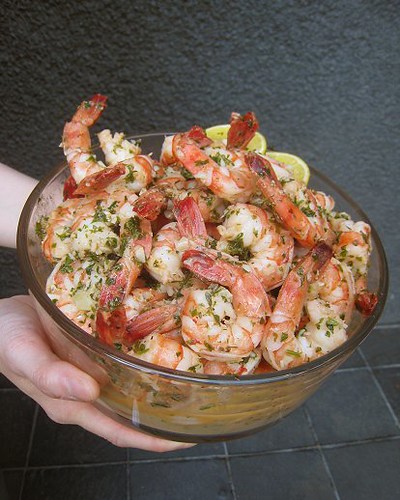
It had been a while since we had nice, plump shrimp at home, and an even longer while since we've had nice, plump shrimp with lots of butter. That clearly needed to be rectified.


TS:
Actually, I've made this dish numerous times before, but I didn't know there was an actual name for it! I've since discovered that this is what people refer to when they say "Shrimp Scampi".


TS:
There's really nothing to it. Just shrimp, lemon juice, white wine, butter, garlic and parsley.


TS:
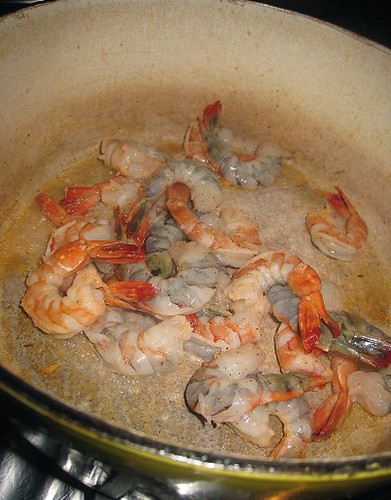
Since I had not a small amount of shrimp, I decided to par-cook them in batches first.


TS:
The shrimp set aside, it was time for the butter!

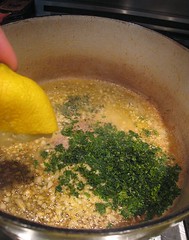
I heated some butter and olive oil, then added minced garlic. I then added the white wine and cooked out the alcohol. The lemon juice went in next, followed by chopped parsley.


TS:
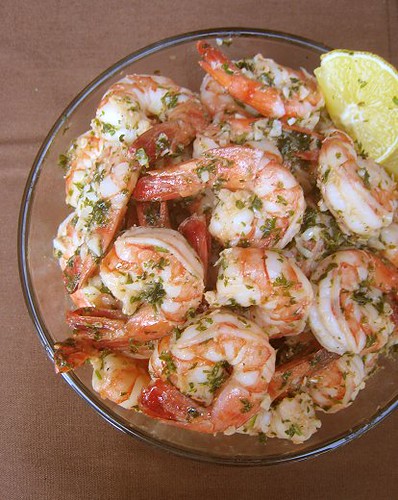
The par-cooked shrimp were added to the pot, and more butter was added. I stirred the whole lot around gently until the butter melted and the shrimp were cooked through.


TS:
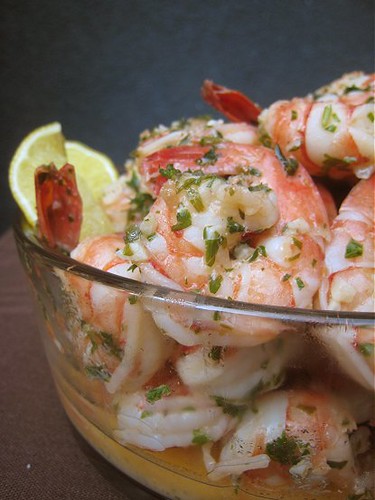
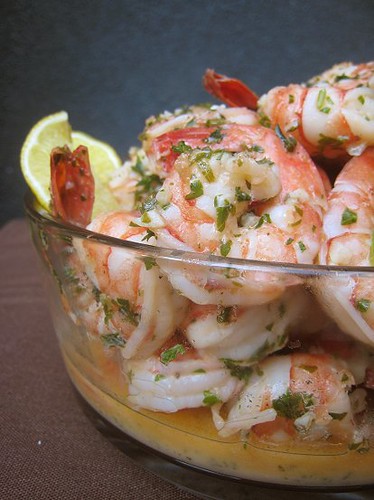
Look at the amount of that butter-y sauce at the bottom of the bowl!

Be sure not to waste that golden elixir. Spoon it over rice, toss it with pasta, soak bread in it, or fill up some glasses and drink it straight up! ;D

Enjoyed this post? Why not subscribe to our blog? Subscribe via reader or subscribe via email. Thank you!


What do you know, there's a shrimp scampi recipe in America's Test Kitchen Family Cookbook. I'll just copy that down for y'all.

Recipe
Shrimp Scampi

from
America's Test Kitchen Family Cookbook

Serves 4 to 6


2 pounds extra-large shrimp, peeled & deveined

salt and pepper

1/8 tspn sugar

2 tablespoons oil

4 tablespoons unsalted butter

4 garlic cloves, minced

2 tablespoons fresh lemon juice
2 tablespoons minced fresh parsley
1 tablespoon dry white wine or vermouth
pinch cayenne pepper


Pat the shrimp dry with paper towels, then season with 1/4 teaspoon salt, 1/4 teaspoon pepper, and the sugar.

Heat 1 tablespoon of the oil in a 12-inch non-stick skillet over high heat until smoking. Add half the shrimp to the pan in a single layer. Cook until the shrimp are curled and pink on both sides, about 2 minutes. Transfer the shrimp to a bowl and cover with foil.

Repeat with the remaining 1 tablespoon oil and shrimp.


Add 1 tablespoon of the butter to the skillet and melt over medium heat. Add the garlic and cook until fragrant, about 15 seconds.

Off the heat, stir in the lemon juice, parsley, wine and cayenne. Whisk in the remaining 2 tablespoons of butter. Season with salt and pepper to taste.


Return the shrimp with any accumulated juice to the skillet. Toss until the shrimp are well coated with the sauce.

Friday, October 22, 2010

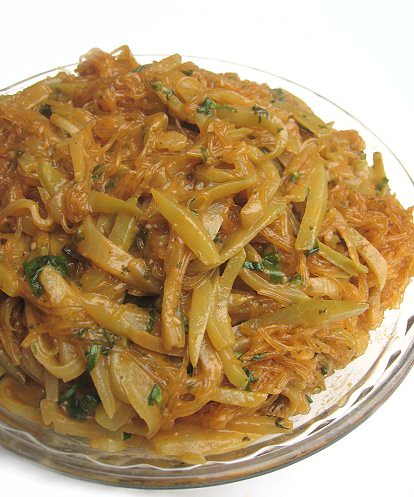
Chayote and Bean Thread Vermicelli with Mussel Coconut "Bisque" Sauce


TS:
A while, while, while back, we had a party. Besides numerous other dishes (of course), we also cooked off 8 pounds of mussels à la Congolaise.

I don't exactly know how these flavors are Congolese. We had seen this descriptor on a local restaurant's menu for a dish cooked with tomatoes, coconut milk/cream, "smoky chili" and citrus.

Congolese? Really?


TS:
Congolese or not, the flavors work.

So, I sautéed some onions and garlic along with tomato paste until the tomato paste was nicely cooked.

I may or may not have added a little bit of smoked paprika as well.

Then, I poured in some white wine and after a little bit, coconut milk.

The 8 pounds of mussels jumped into the creamy pool.

When they were cooked, I finished the whole thing with just a little squeeze of lime juice, and a generous amount of cilantro.


TS:
Why am I going on and on about mussels when this dish doesn't seem to have a mussel in sight?

After the guests had left, I noticed the serving bowl was devoid of mussels, but filled with the "Congolaise" sauce. As you may have already imagined, cooking 8 pounds of mussels will yield you quite a lot of exquisite mussel liqueur.

I couldn't waste that!

This was pure shellfish-y gold. It was so rich and flavorful that I had to christen it a "bisque".


TS:
What to do? What to do?

Wanting to do something different with some chayote on our counter besides our usual, I got to thinking and set to work.


TS:
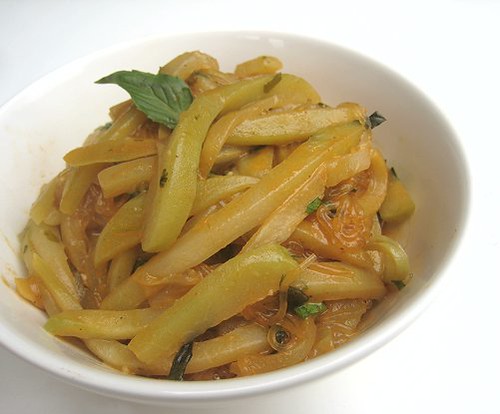
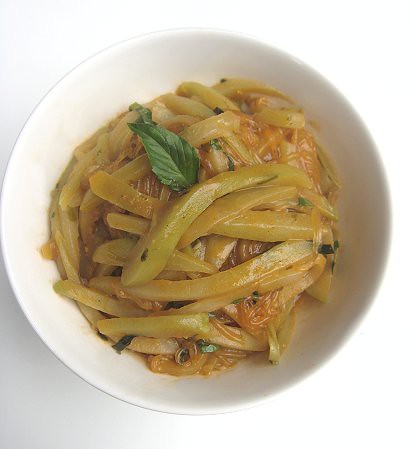
I brought the mussel-infused coconut-tomato "bisque" to a boil then a simmer, reducing it somewhat, then dumped in my peeled chayote batons.


TS:
It seemed to me, though, that I still was not taking full advantage of the broth-y goodness in the pot.

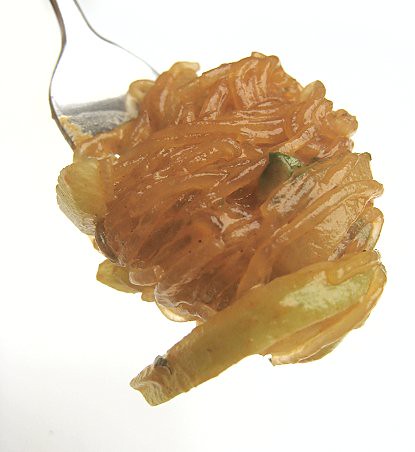
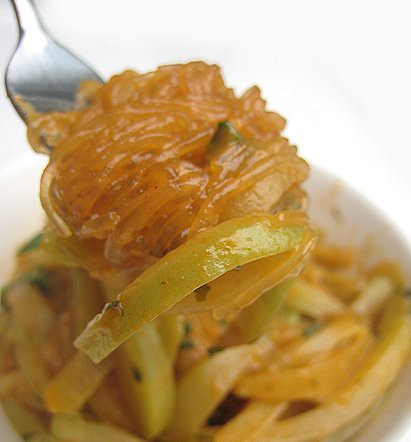
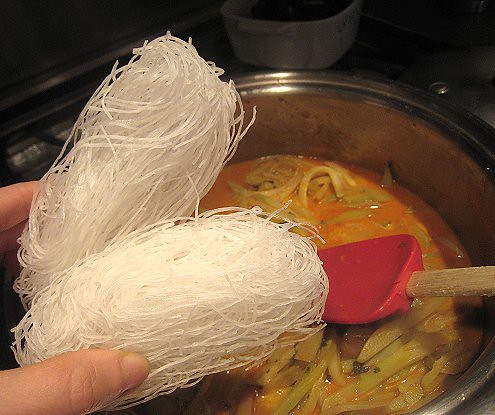
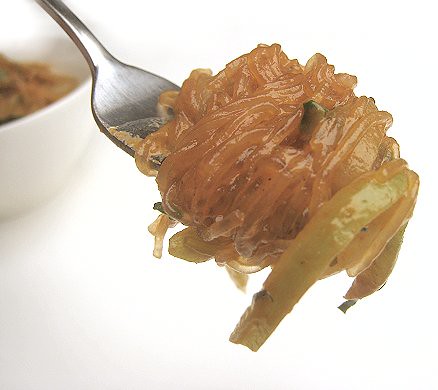
Noodles! That's what this needs. Taking the path of least resistance, I opted for bean thread vermicelli. No pre-cooking required. I just placed them in the pot until they were cooked. A few minutes, tops.


TS:
With the bean thread vermicelli, this dish seemed to have taken a decidedly Asian turn.


TS:
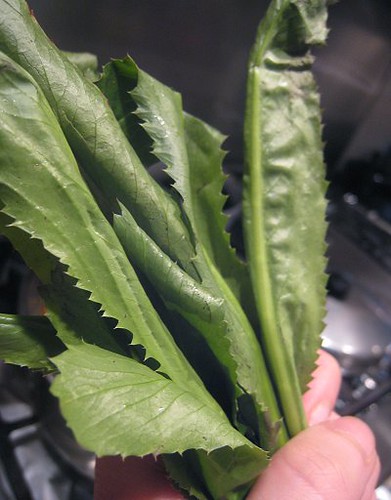
So, why not use up the rest of the culantro, aka saw-tooth herb, aka ngo gai, aka Mexican cilantro, that I still had leftover from making Pho Ga (Vietnamese Chicken Noodle Soup)?


TS:
For a dish of dubious origins and muddled pedigree, this was absolutely mind-blowing!

The "bisque" was so rich and satisfying -- I do not know how that amount of liquid could have packed that much wallop of mussel-tomato-coconut flavor.

I love chayote and having it in this new, unusual way was a delight. The bean thread noodles absorbed all that bisque-y goodness and the culantro gave the dish a bright, verdant flavor.


TS:
The moral of the story: next time you have mussel liqueur from 8 pounds of mussels, you know what to do. ;)

Enjoyed this post? Why not subscribe to our blog? Subscribe via reader or subscribe via email. Thank you!

Thursday, October 14, 2010

Aya Sofya (Hagia Sophia) (Istanbul, Turkey)


TS:
Another "must-see" in Istanbul, the Aya Sofya (Hagia Sophia in Greek).


The unassuming exterior.

TS:
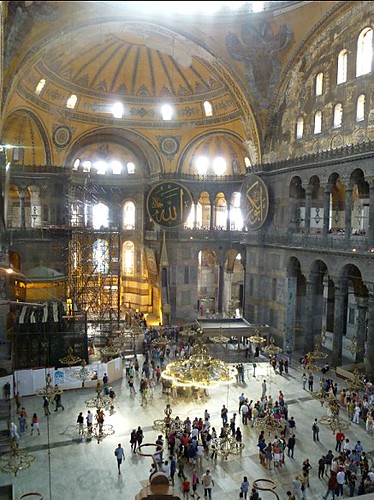
The Aya Sofya looks quite small and, frankly, quite dull from the outside. But inside...


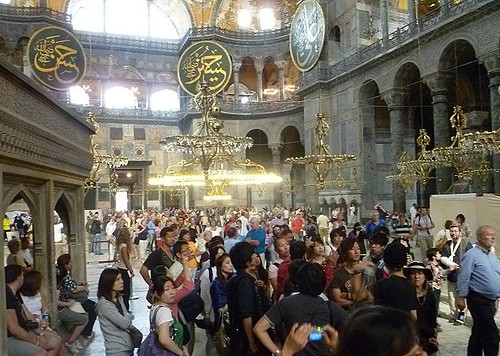
People, people, people everywhere.

TS:
I don't know how that "tiny" structure outside could house this interior!

In a nutshell, work on the present structure began around 532 A.D. and there were numerous instances of damage and periods of reconstruction.


TS:
It was the largest basilica in the world for around a millenium and had quite an architectural influence.


TS:
Originally built as an Eastern Orthodox church, it was later converted to a Roman Catholic cathedral, then to a mosque.


Carpets once covered the marble floors.

TS:
Its interior reflects this complicated history.


TS:
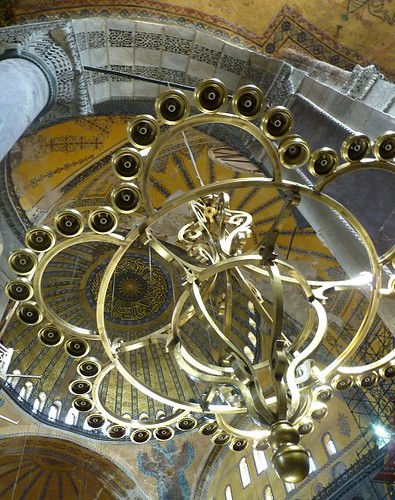
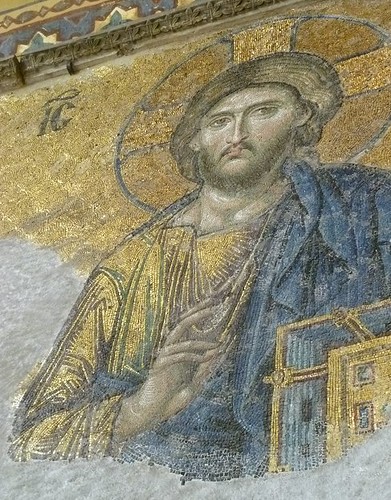
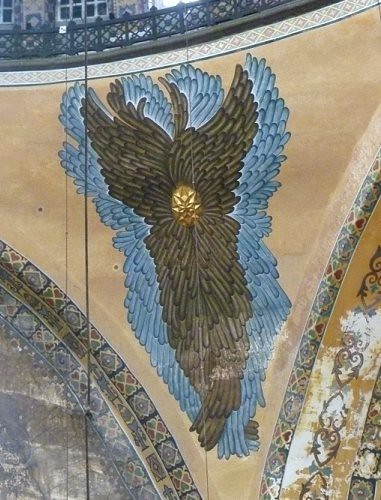
Various types of mosaics reflecting different periods adorn the interior surfaces, with some having been painted or plastered over. The mosaics have been or are being restored.


TS:
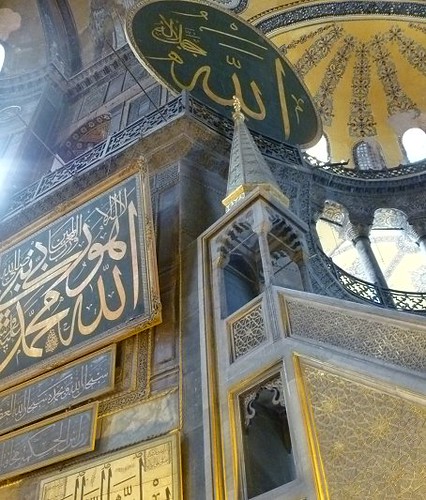
Giant medallions inscribed with Islamic calligraphy hang on columns.


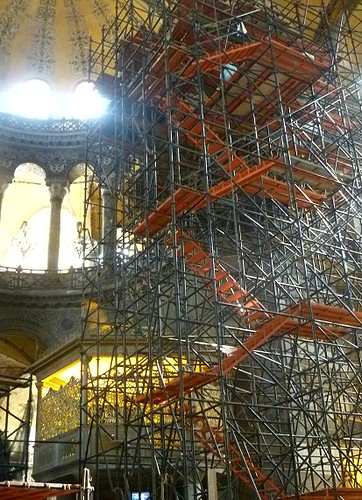
Scaffolding.
Apparently, there used to be much more scaffolding around in previous years.

TS:
Mustafa Kemal Atatürk, "father" of the Republic of Turkey, transformed the site into a museum in 1935.


TS:
That's as small a nutshell as I could manage.


Hmm, this is just... um, not "pleasing to the eye".


On display:
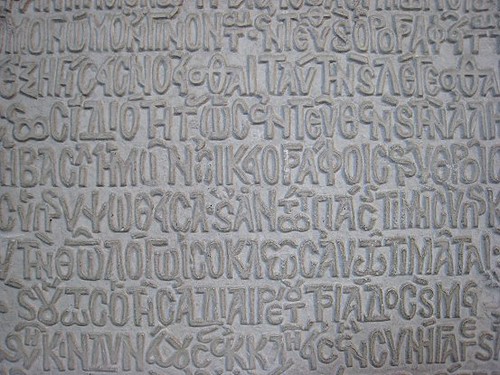
A copy of a record of decisions passed by a general synod (a regular supreme religious assembly) that was held at Hagia Sophia in 1166.


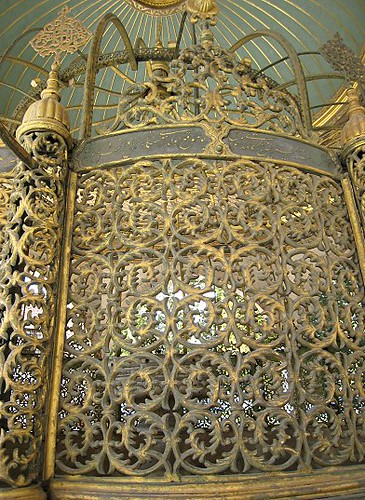
Şadırvan
, a fountain for ritual ablutions.

Nobody seemed to be taking notice of this structure.


But, it's nice, no?

update
Coincidentally enough, I chanced about Martha Stewart's Istanbul Show videos on her website! There's a short description, as well as a video of her visit.
Martha Stewart: The History of Hagia Sophia

For more information:
Wikipedia: Hagia_Sophia
Turkey Travel Planner: Ayasofya (Hagia Sophia)

eatingclub vancouver in Turkey (September 2010)
Sultanahmet Camii (Blue Mosque) (Istanbul, Turkey)
Aya Sofya (Hagia Sophia) (Istanbul, Turkey)
Topkapı Sarayı (Palace) Museum (Istanbul, Turkey)
Turkey Flora
Hierapolis Ruins and Travertines (Pamukkale, Turkey)
Güray Pottery (Avanos, Turkey)

For Turkish dishes:
Turkey (the country, not the fowl)
Turkish Çay (Tea)

Enjoyed this post? Why not subscribe to our blog? Subscribe via reader or subscribe via email. Thank you!

LinkWithin Related Stories Widget for Blogs